We specialize in special mail-order gourmet products!

Wednesday, April 13, 2016

Delices & Gourmandises introduces to you the Chartreuse

Used to aromatize chocolate, and in many cocktails recipes, the Chartreuse are also part of many delicious recipes. Delices & Gourmandises presents you this famous flavored liquor.

The story of the Chartreuse by Delices & Gourmandises
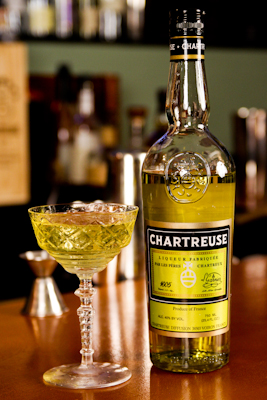

The Chartreuse is made of a mix of 130 plants that are macerated in alcohol, and in which is added distillated honey and sugar and sugar syrup. No chemical product is added. The macerated beverage is aged in oak barrels before it is put into bottles. A longer ageing helps to optimize the quality of the drink, for it to gain the appellation “V.E.P”.


It has probably been created in the 17th century when the Maréchal d’Estrée entrusted an elixir that was supposed to help having a very long life to the Chartreux monks in Paris. But it was in Grenoble, in 1737, when a simpler method for producing it was discovered that the 55° green Chartreuse won its fame.


Despite many problems as the French Revolution in 1789, the ejection of the Chratreux from France and the destruction of the main distillery in Fourvoirie, the monks kept the recipe as a secret and opened a new distillery in Voiron where the beverage is still produced until nowadays.

The Chartreuse, a main ingredient for several cocktails


There are many versions of the Chartreuse as the traditional green chartreuse, the yellow chartreuse of 40° that has flowers scents, the “Génépi”, etc.

Drunk “on the rocks”, mixed with tonic or several fruits juices (as lemon or apple juice), or with other alcoholic drinks, the chartreuse gives many possibilities of cocktails. You can so make your own mixes, as long as your imagination works.

This beverage is ideally served fresh or iced as liquor. But it can also be used for aromatizing pastries and desserts as pancakes, ice-creams, apple pastries. Try it with iced melon, it’s delicious. It is included in many recipes of Delices & Gourmandises products. Used in cooking, it perfectly accompanies smoked fishes and poultry sauces.

Friday, April 8, 2016

Coq au vin prepared with Delices & Gourmandises’ wines

Coq au vin is a French cuisine and a must-eat for all fine gourmets and choosing the perfect wine to cook it is the key. Delices & Gourmandises’s wine cellar offer a wide range of well-bodied wines to successfully prepare a tasteful dish following below recipe.

Ingredients needed to prepare coq au vin for 6 serves


- 1/2kg cock already cut into pieces
- 1l of full-bodied red wine. The Chapinière Cuvée Rousseau or the Merlot les Estampilles from Delices & Gourmandises’ cellar are ideal.
- 5cl of cognac
- 200gr of bacon
- 150gr of button mushrooms
- 1 red onion
- 2 carrots
- 2 garlic cloves
- 1 bouquet garni
- 5gt peppercorns
- 15cl of oil
- Salt, pepper
- 1 tablespoon of flour or starch


How to prepare your coq au vin?


Start with the marinade: pour the wine into a large glass bowl; then add the chopped bouquet garni and peppercorns. Place the cock in the marinade, cover and refrigerate overnight.
The next day, strain the meat. Filter the marinade and set aside.

Heat the oil in a casserole and fry the pieces of meat until golden brown. Remove the meat from the pan. Now, place the sliced carrots and chopped onion in it. Let simmer for 5 minutes and pour the flour or starch and mix well to perfectly coat the vegetables.

Add the pieces of meat in the casserole. Crush the garlic cloves and add them to the preparation. Heat the cognac, pour it into the pan and flambé.

Pour the wine marinade into the preparation, salt and pepper to your convenience. Boil then reduce heat. Cook for about 2 hours and half.

Bask sliced mushrooms with the bacon and add them to the coq au vin 15mn before the end of cooking time.

Wednesday, March 30, 2016

Delices & Gourmandises presents the AOC wines from Languedoc area

Languedoc-Roussillon is known to be the largest and the best wine-producing region of France. Its fame also came from the quality of the ancient grape varieties used to make the beverage and the strict producing rules. Delices & Gourmandises opens you up to the characteristics of the Languedoc AOC wines.


Wines made with ancient grape varieties


Wine producers of Languedoc generally use black Grenache, Mourvèdre and Syrah for making their AOC red and rosé wine. Black Carignan and Cinsault are sometimes added.

For the white wines, at least 8 grape varieties are used: white Grenache, white Clairette, Roussanne, Bourboulenc, Rolle, white Piquepoul, Marsanne and Tourbat. White terret, Maccabeu and white Carignan are also used in some mixes.

The wine making methods are the same for ages. Traditional techniques and carbonic maceration are used for the making of the red wine. The white wines and the rosés are made with the direct pressing technique.

A wide range of AOC wines


The Languedoc wines that have received the AOC certification are:

- Red wines that have bright colors, strong red fruits aromas, and some spicy notes. Among the most known ones that are really appreciated by wines fans, we can mention La Caresse Merlot that is characterized by its fruity jams

- Rosés wines that have fresh fruits aromas. As they are quite light, these beverages can perfectly accompany grills and be served at aperitifs.

- White wines that have bright yellow color and their specific aromas: a subtle mix of fruits and white flowers. The Chardonnay and the Tiberius blanc will be a perfect side dish for fishes and French cheeses.


The AOC Languedoc wines mentioned are all available in the Delices & Gourmandises catalog. Many other great wines can be ordered on the site for accompanying your meals, aperitifs or cold meals.

Friday, March 25, 2016

Wine grapes, what are they exactly?

You have surely heard about wine grapes once and you are wondering what they are exactly. Here is an explanation proposed to you by Delices and Gourmandises.


Wine grapes are the main ingredients used in the production of the best wines available at Delices and Gourmandises


There are two types of grapes which are wine grapes and table grapes. These two types of grapes, furthermore, encompass about forty different kinds of grape varieties.

Table grapes are those intended for consumption while fresh. Those are the much larger size grapes you find at your table during dessert. On the other hand, wine grapes are used by wine producers to make wine. They are of smaller size and could be harvested at different stage of the grapes ripening. However, the harvesting period always starts at the beginning of the fruit’s ripening. There exist, indeed, grape varieties that need to be harvested much later in the ripening process in order for the wine to have specific aromas and taste.


The different type of wine grapes used in the production of wines available at Delices and Gourmandises


Delices and Gourmandises’ wine cellar have various great AOC (Appellation d’Origine Contrôlée) wines that are available either bottled or in cubic containers. They are good to enjoy as appetizer or to accompany your meal.

The most common wine grapes available in Delices and Gourmandises’ wine cellar used for the production of red wines are: Merlot, Cabernet Sauvignon, Pinot Noir, Grenache, and Mourvèdre. Chardonnay, Clairette, Cinsault, Sémillon, and Muscadelle are on the other hand used for white wines production. All wines offered by Delices and Gourmandises are from great French terroirs and vineyards. You will easily find inside Delices and Gourmandises catalogue wines from Alsace, Côtes-du-rhône, and Bordeaux.

Thursday, March 17, 2016

The Armagnac, a multi secular brandy

Known since many centuries for its therapeutic properties, the Armagnac is also appreciated for its taste, its rich aromas that combine strength and roundness, and its beautiful color that reminds the color of the amber. Delices & Gourmandises tells you more about this beverage.

The oldest French brandy


The Armagnac is an ancient brandy that is actually about seven centuries old. It originally comes from Gascoigne region in France. It was already drunk at the 14th century and was mostly used as medicine; it was in fact one of the most popular medicines of these times.

The Armagnac is mostly made with craft methods with white wine. The wine is permanently distillated in an alembic. The beverage obtained is then put into oak barrels of about 400 liters for maturation during several years. The oak has been chosen for it transmits its wooden aroma and produces spicy and fruity aromas.

How to taste the Armagnac?


Delices & Gourmandises recommends you to serve the beverage in those tulip-shaped glasses or in balloon glasses for those glasses concentrate the aromas. The Armagnac can be served as aperitif, during a meal or as a liqueur after a heavy meal. You can serve it as-is but you can also add some ice or sparkling water. It will perfectly accompany a dish of foie gras, delicatessen or duck breast.


This brandy can also be used to make cocktails and meals. Prunes of Agen or fig macerated in Armagnac are delicious as dessert, with ice cream. The Three stars (aged 2 or more) and the VSOP (aged 5 or more) would be perfect. In Delices & Gourmandises catalog, you can find  some of these delicacies.

Friday, March 11, 2016

Delices & Gourmandises’ Belgian chocolates: a great time!

Symbols of Belgian quality all around the world, Belgian chocolates have a key place in Delices & Gourmandises catalog.

Tasty moments with Delices & Gourmandises


The history of Belgian chocolate dates back to the seventeenth century. At that time, cocoa was landed in the port of Antwerp from Curaçao Island in the Caribbean. Offered by the monks of the Abbey of Baudeloo near Ghent in 1635, this gift was one of the first tracks of the bean in Belgium, which was then only enjoyed as a luxurious drink by the royal family and aristocrats.


Over the following centuries, it becames very popular and was introduced in desserts. In 1857, Jean Neuhaus, pharmacist, had the idea to coat its medicinal preparations of chocolate to hide their bad taste: the first chocolate factory was born. A few years later, he even invented the praline, a real trademark of the Belgian confectionery, which justifies its selection by Delices & Gourmandises.

In addition to the skills of its chocolate-makers, Belgian chocolate’s fame first is built on the quality of the selected cocoa beans and their roasting. Moreover, their grinding is finely realized, another specificity of this chocolate, as well as a high cocoa content (often 43% instead of 35% generally).

Among the great names of Belgian chocolate, apart from Neuhaus, there is Côte d'Or, created in 1883, Leonidas (1913) or Godiva (1926).

The famous Belgian pralines proposed by Delices & Gourmandises


Pralines are mainly handmade with caramelized sugar coated with chocolate. These melting-in-the mouth chocolate-filled sweets are then decorated in a personal way by each master chocolatier.

Delices & Gourmandises offers you a unique assortment of 10 varieties of pralines, among which are the mendiants made with chocolate, hazelnut, almond and orange slices.

Wednesday, February 10, 2016

Dry wines presented by Delices and Gourmandises


Dry wines can accompany an appetizer as well as a seated meal as far as you know the types of foods to pair with them. However, all dry wine are not necessarily good ones. Find out the characteristics of good dry wines in this short guide by Delices and Gourmandises.

What is meant by "dry wine"?


Oenologists and wine experts agree to qualify as "dry wines" those whose sugar content is less than or equal to four grams per liter (4 g/l). A dry wine will then be more or less acid. Above 4g, it is called sweet wine. The dryness of wine is estimated from its fat, and the beverage’s dryness is measured and evaluated while on the palate.

The main elements that bring the wine its dryness are the quality of the tannins on the one hand, and the wine acidity on the other.

The different types of dry wines


We all know the dry white wine. It has a very slightly sweet taste in the mouth or not at all. Many of them have aromas that well outweigh their slight acidity. In the same category, dry champagne is a little softer, thus sweeter. There are also dry rosé wines that stand out for their fruity or woody aromas.

Although we can qualify red wines as dry because they contain very limited quantity of sugar, a really dry red wine is a poor quality wine, bitter and flat, which dries the mouth.

Delices and Gourmandises offers two dry white wines. Riesling Moulin de Dusenbach is an Alsatian white wine that can be enjoyed with seafood, shellfish or fish. Château Cazeau Entre-deux-Mers white will be perfect with foie gras, sole meunière or good Roquefort.