We specialize in special mail-order gourmet products!

Monday, August 15, 2016

Délices et Gourmandises, the Kingdom of kugelhopf

From the eighteenth century, both kids and adults are fond of kugelhopf, a tasty celebration cake that became even more popular because of the mystery surrounding its origins and legends about it. Let’s find out more about it with Delices and Gourmandises.


An exquisite brioche with multiple spellings


Sweet bread, similar to brioche, flavored with raisins and almonds, baked in a ring-shaped clay mold, and usually sprinkled with powdered sugar before serving, kugelhopf is an Alsatian specialty. It is also popular in other European countries such as Austria, Czech Republic and south Germany, which explains the wide variety of spellings when it comes to write its name.
To enjoy this taseteful brioche, Delices and Gourmandises recommends to dip your kugelhopf slices into coffee with milk for breakfast. It can also be enjoyed at afternoon snack time.

Discover Delices and Gourmandises’ desserts selection


Prepared with flour, butter and raisins, kugelhopf baked by Delices and Gourmandises are best when served warm for dessert. The small amount of orange and lemon zest adds some extra flavor complexity. The cake has a nice golden color on the outside in an appetizing presentation.
The cake is entirely topped with icing sugar, and is to be enjoyed without moderation with family or friends by the fire place.
To enjoy our delicious kugelhopf, you are most welcome on our website to place your order. It will be door-delivered within 48 working hours, after a preparation meeting the standards of safety and hygiene.

Friday, August 12, 2016

Learn more about gum arabic thanks to Delices and Gourmandises

Gum arabic is often found in sweets and other food. To taste it, try Delices and Gourmandises delicious acacia sweets that are made with gum arabic. If you want to know more about this ingredient, this article is for you.


What is gum arabic?


This ingredient used in Delices and Gourmandises acacia candy is actually solidified sap produced by a variety of acacia. It is also called acacia gum. Some also know it as Senegal gum, although the tree from which it is extracted comes from Sudan. It is rich in potassium salts, magnesium, and calcium. It has no taste, no peculiar smell, and dissolves in water. It is sold in powder or crystals, and its color varies from yellow to brown.


What are the main uses of gum arabic?


Gum arabic has been known for millenniums and is used in many areas, to secure Egyptian mummies bandages, but nowadays to solidify textiles and make them shine. In cosmetics and pharmacy, it is used to cure certain skin conditions and to heal wounds. In building construction, it optimizes roofs impermeability. Finally, it is used to make paper gummed for labels and stamps.


Gum arabic in food


Gum arabic is a treat to chew in its home country. You can find some on Delices and Gourmandises under the name acacia candy. In the food industry, it is known as E414. It is used as an emulsifier in citrus-extracted oils tastes and support for flavorings. It is also very effective as a colloid in emulsions.

Friday, August 5, 2016

An easy-to-make rock praline recipe with Delices and Gourmandises

Among Delices and Gourmandises’best sellers, delicacies lovers certainly know and appreciate pralines rocks. Crunchy on the outside, nicely smooth on the inside, they are simply irresistible! Surprise your beloved ones, prepare them on your own following this easy recipe.


Delices and Gourmandises shares the main ingredients


For the praline, you need 150gr of hazelnuts, 130gr of sugar, 1 vanilla pod, 20gr of dark chocolate with a minimum of 60% of cocoa and 80gr of milk chocolate. Use 80gr of whole hazelnuts for topping. For coating, you need 50gr of mixed nuts, 200gr of dark chocolate with a minimum of 60% cocoa and 200gr of milk chocolate.


Over the years, the pastry masters have brought their own personal touch by adding chopped almonds, some biscuit or 10cl of cream to improve the taste and texture of this delicacy.


Prepare your pralines rocks with Delices and Gourmandises


As a start, prepare the filling and praline: pour the sugar and hazelnuts in a pan. Divide the caramel on baking paper. Once cooled, the caramel should be coarsely manually crushed. Then mix everything until you get a thick and grainy praline paste. Set this preparation aside and move to the coating. Melt the dark chocolate and milk chocolate, then add the mixed nuts, praline paste and chopped almonds and other ingredients you want to include the preparation.


Mix until obtaining homogeneous dough to pour into a pastry bag, which is to be placed in silicone molds for easy removal. Refrigerate for at least two hours. Once unmolded, your pralines rocks can be chocolate-coated then sprinkled with praline. When you lack time, there’s a solution: order an assortments of chocolates or chocolate pastries from Delices and Gourmandises, your favorite online confectionery.

Friday, July 22, 2016

Some techniques to preserve your wine well

If you plan to age wine at home, or if you just want to have a good bottle at your house in order to celebrate a special occasion, here are some techniques presented to you by Delices and Gourmandises.


Learn how to create optimal wine aging conditions with Delices and Gourmandises


First, you need to know how to get a wine cellar temperature at home. It has to be fresh with a temperature between 10°C and 14°C.  Thermal shock and the shift between warm and cold can degrade the elasticity of the cork which can lead to a possible air penetration inside the bottle and cause the fast oxidation of the wine. Make sure you lay down the bottle in order to bedew the cork. Unnecessary movement and vibration can also degrade the quality of the wine.

Humidity inside the room must be between 70% to 80% so that the cork remains intact. Be sure it doesn’t get passed that threshold; otherwise it will stimulate the presence of moisture and could lead to a total deterioration of the quality of the wine. It is imperative you keep your bottles away from the sun because the UV lights can quicken oxidation.

Find the best wines with Delices and Gourmandises


If you have a room or cellar that gives you the opportunity to have the optimal conditions we mentioned earlier, you can start to keep your wine bottles in there. It is also possible to get a tool that is specifically dedicated to that matter.
In the meantime, you can already browse through Delices and Gourmandises’ catalog to discover the different variety of wines available. You can order your bottle depending on the type of dish you are having. Delices and Gourmandises also offers a home delivery of their products.

Saturday, July 16, 2016

How to keep your wines after the opening of the bottles? Delices and Gourmandises gives you some tips

It would be perfect if each opened bottle of wine can be emptied the same day, but if it is not the case, it is recommended to drink it in 3 to 5 days after the opening. During this time, some precautions should be taken to preserve the taste and the aromas of the wine.


How to keep the red wines?


The 3 big enemies of the red wines are oxygen, high temperature and light. First of all, Delices and Gourmandises recommends you to close well the bottle to prevent the wine from oxidation; you can use its cork if it is not damaged. Then, an opened bottle must be kept far away from heat sources. Finally, you have to keep it far from light; that is why the wine bottles have this deep green color.


You can put your bottle in the cellar if you have one, or in the fridge, on the door pocket and at the bottom. But you still have to drink your wine within 5 days after the opening.


How to keep the white wines?


As the red wines, the white wines do not like light and high temperatures. Moreover, you must know that the very sweet white wines can be kept longer than the others. For keeping the taste and the aromas of your beverages, Delices and Gourmandises advices you to pour them in smaller containers in order to avoid oxidation, and to close them well before you put them in the fridge or in the cellar.


If you are a fan of good French wines, Delices and Gourmandises proposes a wide range of delicious wines from the best French vineyards. You can find red, white, rosé wines but also fruity wines and wines for aperitifs.

Monday, July 11, 2016

Delices and Gourmandises’ vanilla cream cookies finely glazed with chocolate

Delices and Gourmandises offers you a journey into your childhood memories with these biscuits with vanilla cream. Small delicacies to enjoy with family or friends to taste or evening.

Delices and Gourmandises’recipe

For the biscuits
  •  125gr butter
  • 300gr flour
  • 100gr sugar
  • One teaspoon baking powder
  • 2 egg yolks
Mix all ingredients in the bowl of an electric mixer on medium speed until smooth. Remove dough from bowl and knead gently with the fingers. Let stand at least 1 hour in the refrigerator and shape into small balls then spread to a thickness of about 3 mm to 5 mm. Arrange on a plate and bake at 150°C until lightly browned (about 10 minutes).

For the vanilla cream

  • 125gr icing sugar
  • 1 tsp vanilla sugar or a teaspoon of vanilla extract
  • 25gr softened butter
  • 10 ml of milk
Mix ingredients together until you get a smooth paste without lumps

For the chocolate icing

Pastry or regular chocolate (about 100gr)
Spread a thin layer of cream on a biscuit and cover with another. Repeat the process for all the biscuits.
Meanwhile, melt the chocolate in a double boiler. For the icing, simply quickly dip one side of the cookies in melted chocolate.

Some tasting tips

It goes without saying that thank to vanilla cream and chocolate icing these cookies will be obviously very sweet so they will be best enjoyed with a glass of milk for small kids or with plain tea or black coffee for adults.
Once prepared, they can be stored without problem from 10 to 15 days in a sealed cookie box.
Feel free to browse the catalog of Delices and Gourmandises to discover other treats to enjoy at home.

Monday, July 4, 2016

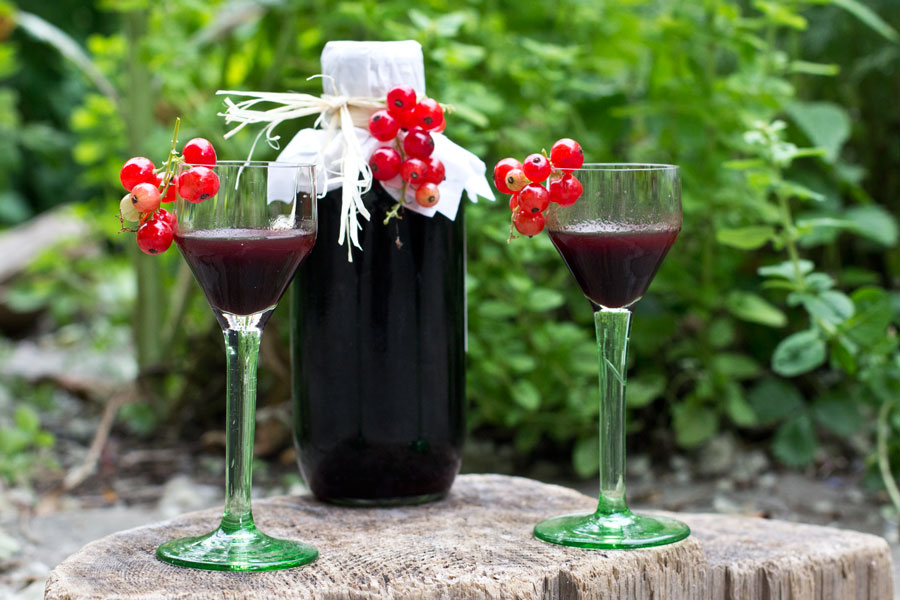
Cassis by Delices and Gourmandises

Cassis, the notorious red-violet colored liquor, makes the reputation of Bourgogne. It is used in cooking to prepare delicious recipes, and is perfect to make delightful cocktails. Discover its history and some tasting tips with Delices and Gourmandises.


Discover the history of the blackcurrant liquor with Delices and Gourmandises


The production of blackcurrant liquor is inseparable from the name of Auguste-Denis Lagoutte. He is the first who started the production of this liquor in 1836, after a visit to the capital, where he could notice the high consumption of blackcurrant ratafia in Parisian cafés.


Cassis is popularized in the early twentieth century, specifically in 1910, when the mayor of Dijon, at an official reception, decided to replace the champagne by this blackcurrant liquor extended with white wine.


Delices and Gourmandises’ advices to enjoy blackcurrant liquor


In cuisine, cassis garnishes perfectly your salads including melon or beetroot. It also goes well with fish, venison, cheese, and various fruits and jams. Nature, it is used as topping on desserts. Cassis is also used to concoct delicious drinks. Depending on your wishes, it is consumed as an aperitif or a digestif. For example you can associate it with dry white wine to make the famous white-cassis. For this, Delices and Gourmandises suggest the “Riesling Moulin de Dusenbach”. As a digestive, it is possible to replace the white wine with red wine. You can also try the vermouth-cassis, a mix of one third blackcurrant liquor, 2/3 of dry vermouth and sparkling water.